
Why You Should NOT Visit St Helena Island unless…..
A fair warning to the restless, the wanderers, and anyone with a life to get back to.
Let me be upfront with you. This is not a typical travel piece dripping with glossy superlatives and carefully curated Instagram captions.
No. This is a genuine, heartfelt warning — the kind a trusted friend might pull you aside to deliver before you make a decision you cannot undo.
I mean it. Don’t go. Stay home. Book somewhere else. Choose the package holiday with the swim-up bar and the buffet breakfast and the Wi-Fi that actually works. Choose somewhere you can fly home from on a whim.
Choose somewhere that won’t rearrange your priorities, reframe what you thought mattered, and leave a quiet ache in your chest for months after you’ve left.
Because here’s the thing nobody warns you about St Helena: you will not want to leave.
And that, for most people with jobs, responsibilities, and flights to catch, is a very serious problem indeed.
The People Will Ruin You
The first trap is the people.
You’ll arrive — by the small aircraft via Airlink that descends toward Prosperous Bay Plain through clouds and winds that make even seasoned travellers grip their armrests — and within hours, possibly minutes, a Saint will smile at you.
Not the polished, practiced smile of someone in hospitality who has been trained to make guests feel welcome. A real one.
The kind exchanged between people who simply enjoy the presence of other people.
This is dangerous.
Within a day or two, you’ll find yourself on first-name terms with half the people in Jamestown.
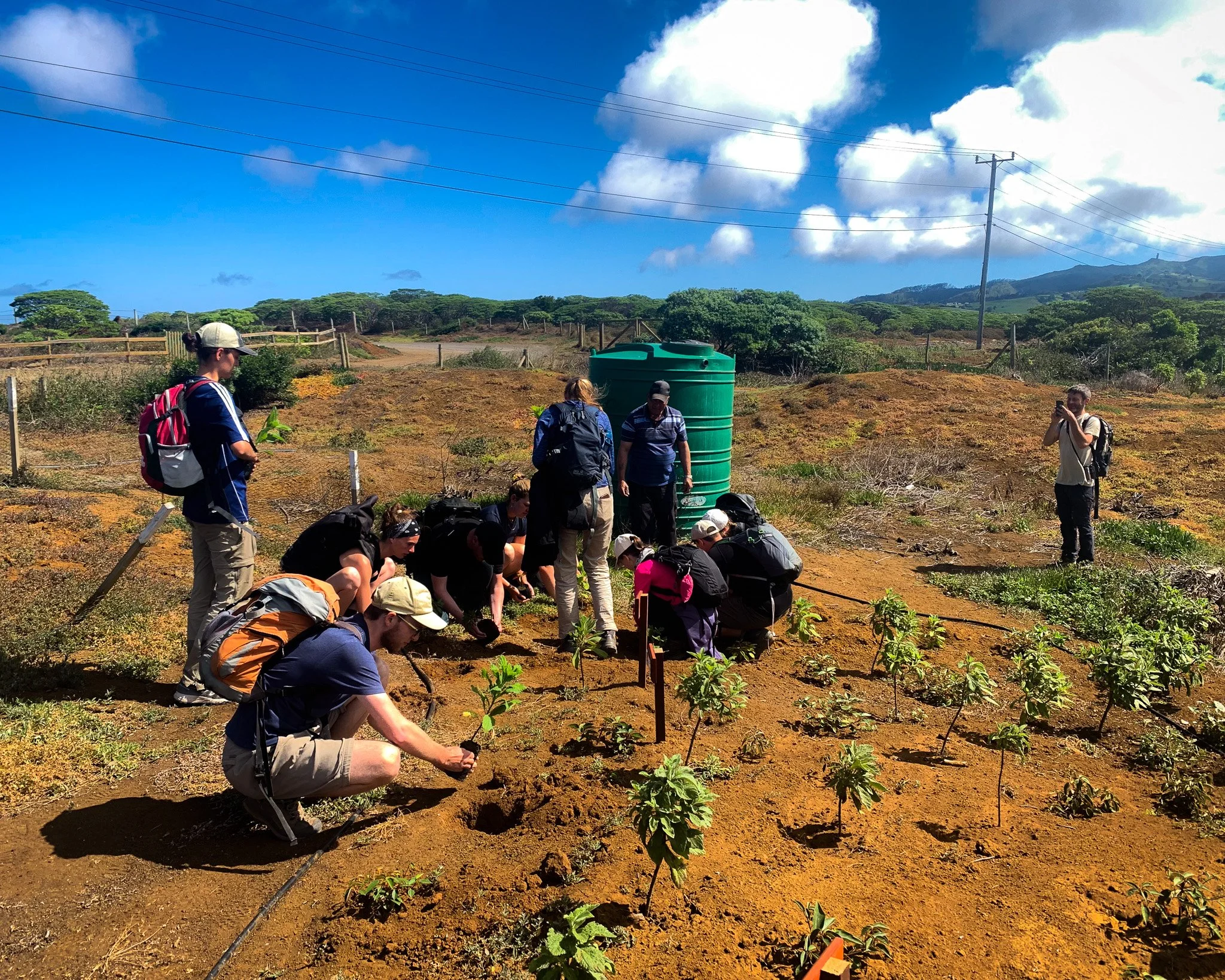
The woman who serves you coffee will ask about your journey, and she’ll mean it. The man who drives you up the switchbacks of Ladder Hill Road will tell you stories about the island with the quiet pride of someone who has never once taken where they live for granted. You’ll walk past a gate, make eye contact with someone in their garden, and somehow end up invited in for tea.
Saints are, by most accounts, among the warmest, most genuinely welcoming people anywhere in the world. Their community is tight-knit in the way that only at most 4000 people on 47 square miles of Atlantic Ocean can be — everybody knows everybody, and remarkably, they seem to genuinely like each other for it.
The problem is that warmth is addictive. Once you’ve spent a week surrounded by people who wave at you from their cars and ask your name before asking your business, going home to a city where eye contact on public transport is considered a social aggression feels like a kind of grief.
You have been warned.
The Views Are Quite Literally Breathtaking
The second trap is what you’ll see.
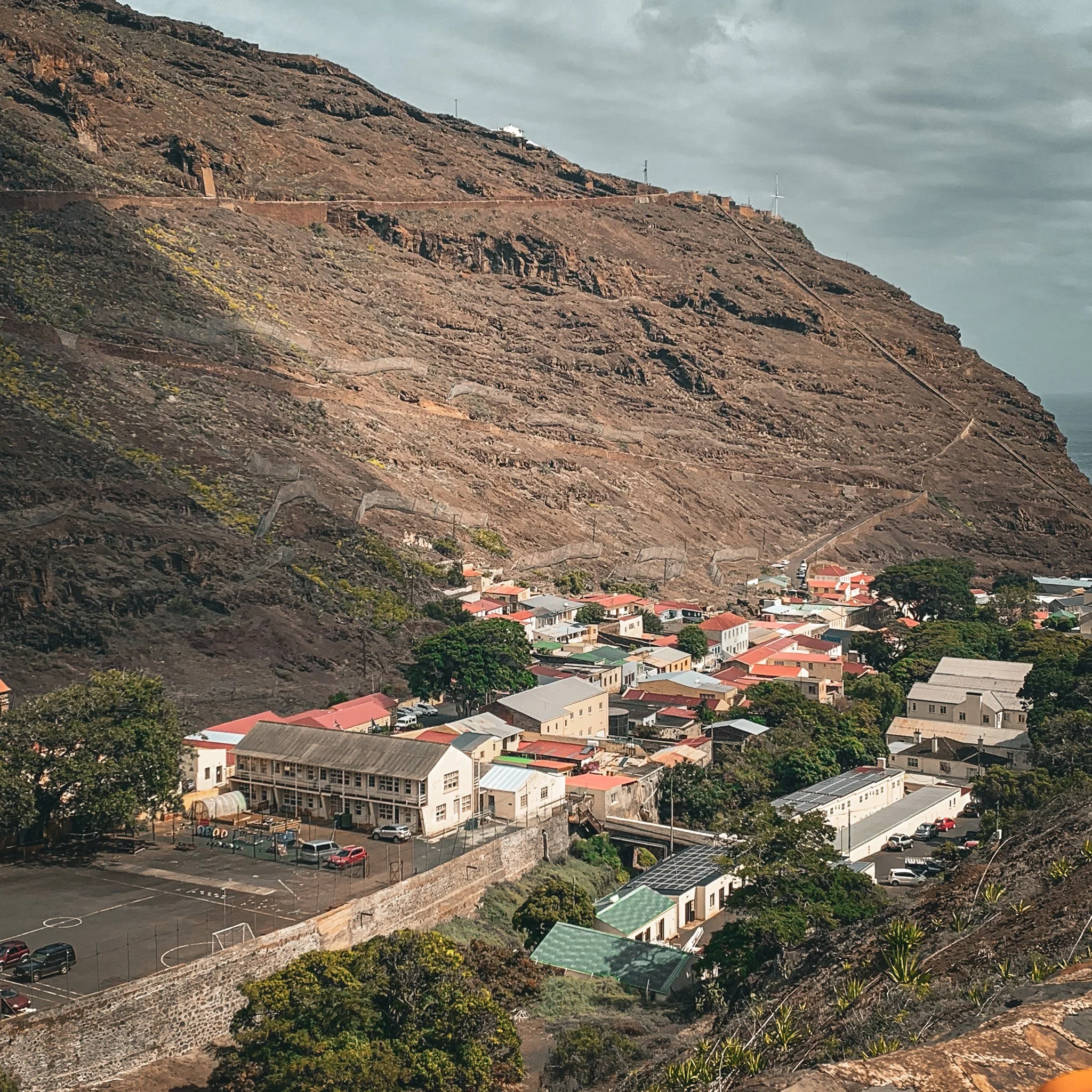
St Helena is a volcanic island of extraordinary drama.
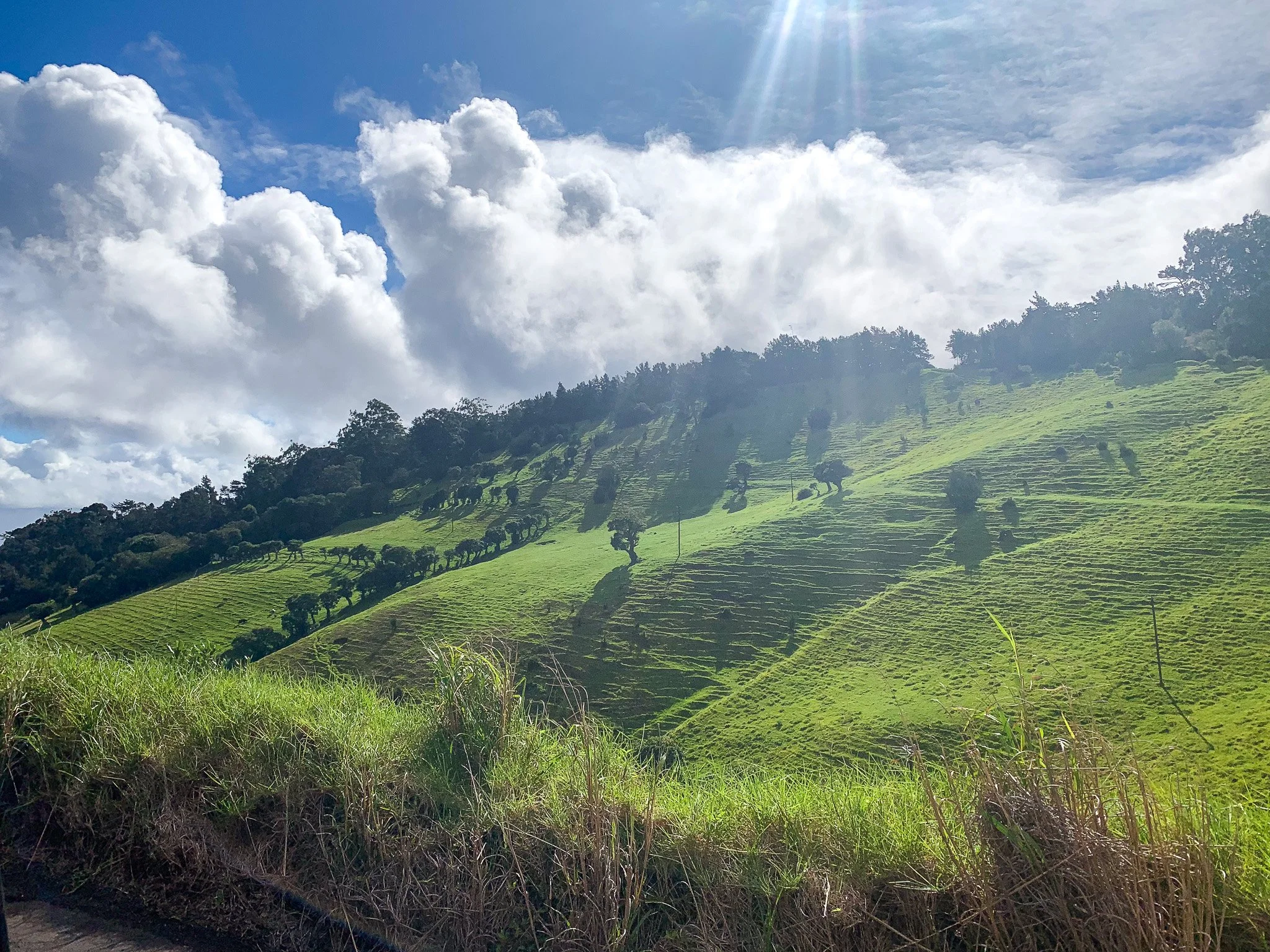
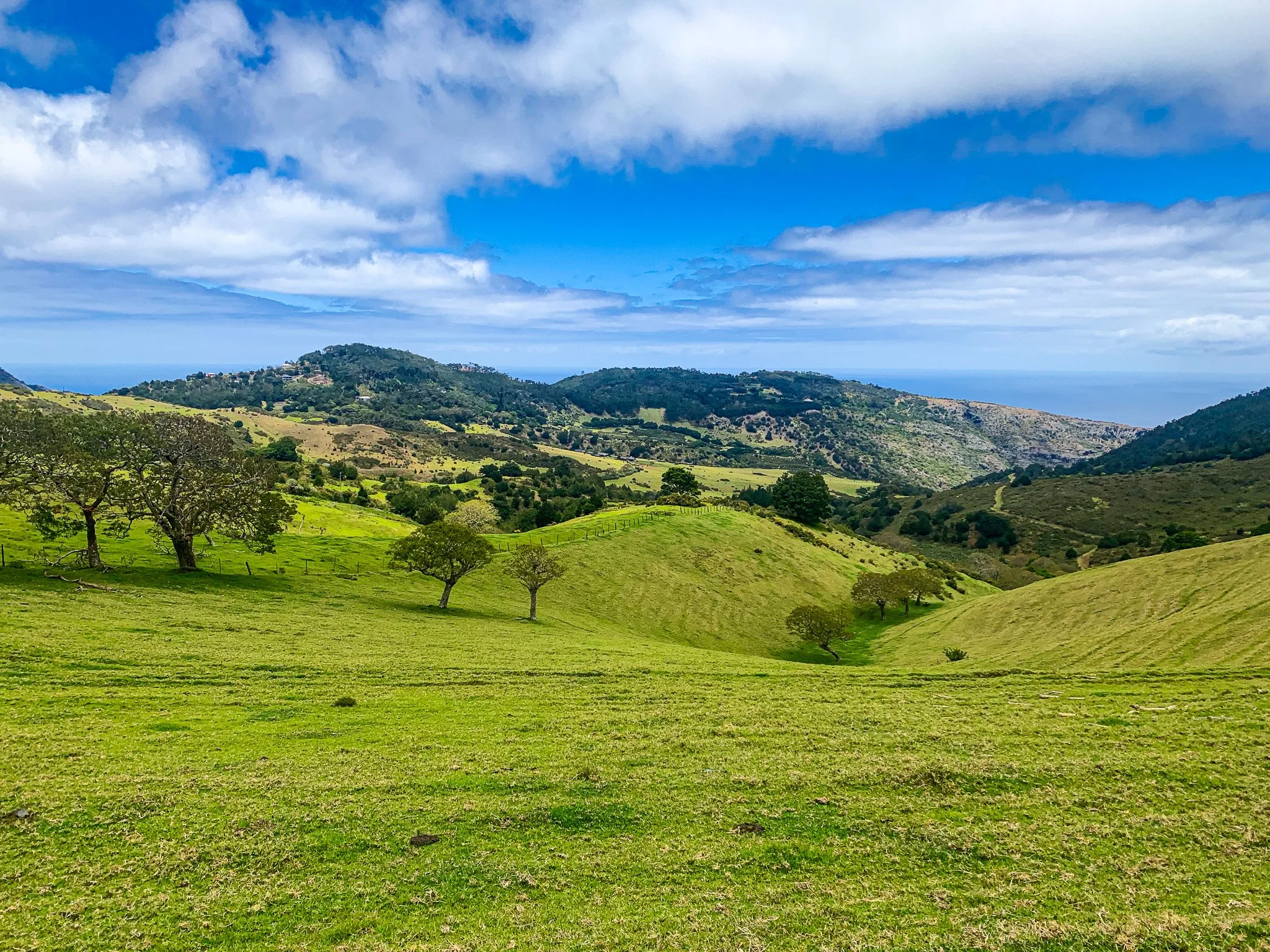
Green peaks tumble down into sheer cliffs. Ancient cloud forests cling to the ridges of Diana’s Peak.
The road to Sandy Bay curves through landscapes so cinematic they feel slightly unreal — as though someone took the Scottish Highlands, transplanted them to the tropics, and dropped them into the South Atlantic for good measure.
Then you’ll turn a corner and the ocean will appear, four thousand metres deep and stretching without interruption to the horizon in every direction, and something will happen to your sense of scale that cannot easily be undone.
The views here are not politely attractive. They are not the kind you glance at, photograph, and move on from. They are the kind that stop you mid-sentence. The kind that make you sit down on a rock at the edge of a cliff and stay there for an hour without noticing.
Blue Point Postbox Wak at sunset.
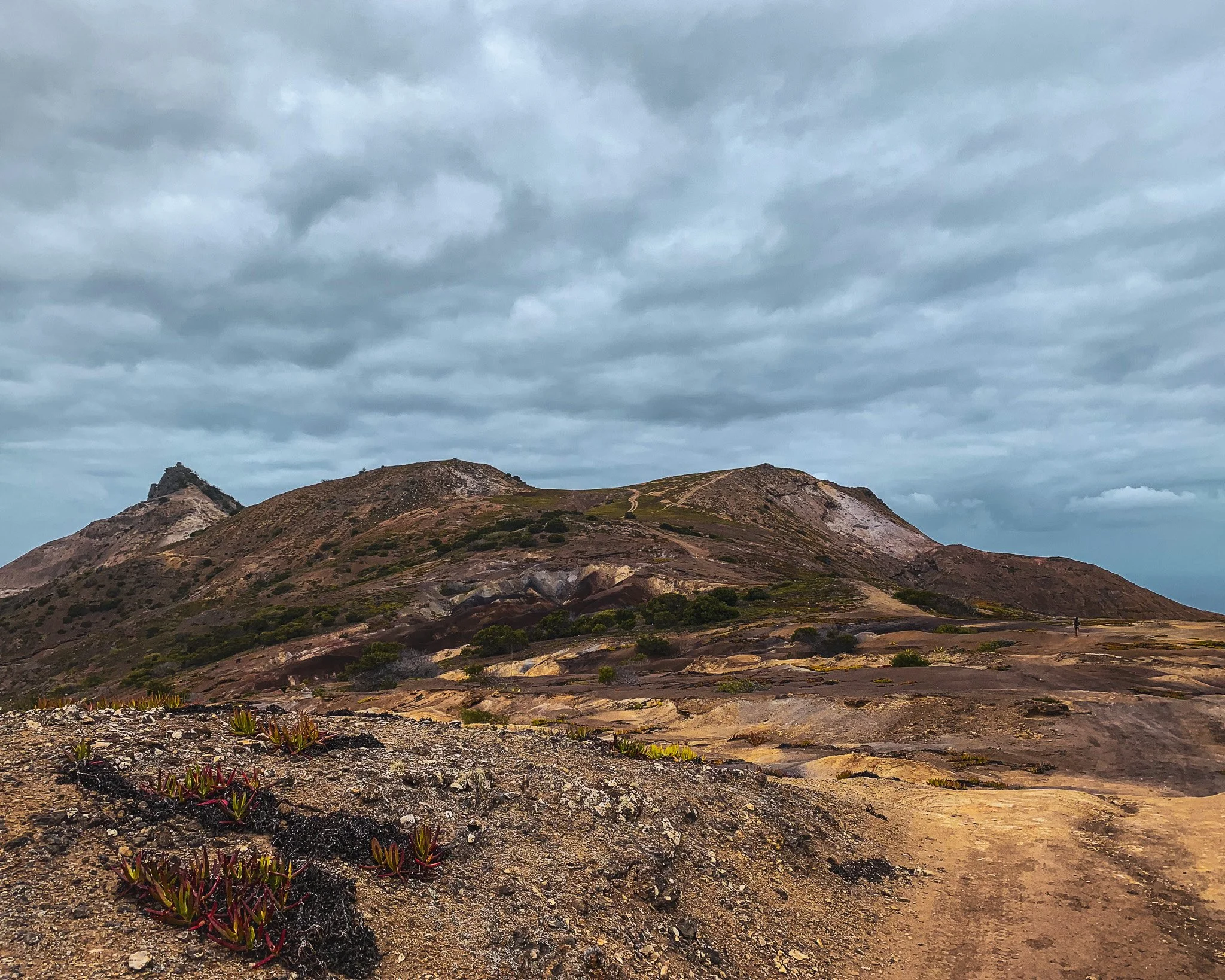
The view down into Prosperous Bay from above, where the lunar landscape of the plain meets the cobalt sea. The moment the morning light catches the valley at Blue Hill and turns everything gold.
People who visit St Helena often describe a phenomenon: photographs, no matter how good, simply don’t do it justice. The island has to be stood in. And once you’ve stood in it, you will spend a long time afterwards trying to explain to people who haven’t been there exactly what it looks like, and mostly failing.
That failure — the inability to put it into adequate words — is its own kind of longing.
Time Works Differently Here
The third trap is perhaps the most insidious, because it creeps up quietly.
You will arrive from wherever you came from carrying the particular tension of modern life: the urgency, the notifications, the low-grade background hum of things to do, emails to send, targets to hit. Most people carry this without even knowing it anymore. It’s simply the weight of contemporary existence.
And then, somewhere around day three on St Helena, you will notice it is gone.
Not suppressed. Not distracted away by activity. Actually gone.
The island operates at a different rhythm. Lunch is taken seriously. Conversations aren’t hurried. The pace of a walk through Jamestown — past the colourful Georgian facades, the castle walls, the market, the small shops where you’ll be greeted by name even if you only visited once before — is the pace of somewhere that has decided, collectively, that there is enough time for things.
There isn’t the relentless churn of somewhere trying to be bigger than it is. There’s no traffic to speak of. There’s no major noise ordinance because there’s no noise. At night, the stars are extraordinary — the Milky Way visible with the naked eye, unpolluted by the ambient glow of urbanisation — and the silence beneath them is the kind that city dwellers sometimes drive hours into the countryside to find, and usually can’t.
The danger of this is real. You will decompress, completely and genuinely, possibly for the first time in years. And then you will have to go back to the rush, and you will know exactly what you’re going back to in a way you didn’t quite know before.
That’s a difficult thing to unknow.
The Ocean Will Get Under Your Skin
If the land doesn’t hold you, the sea will.
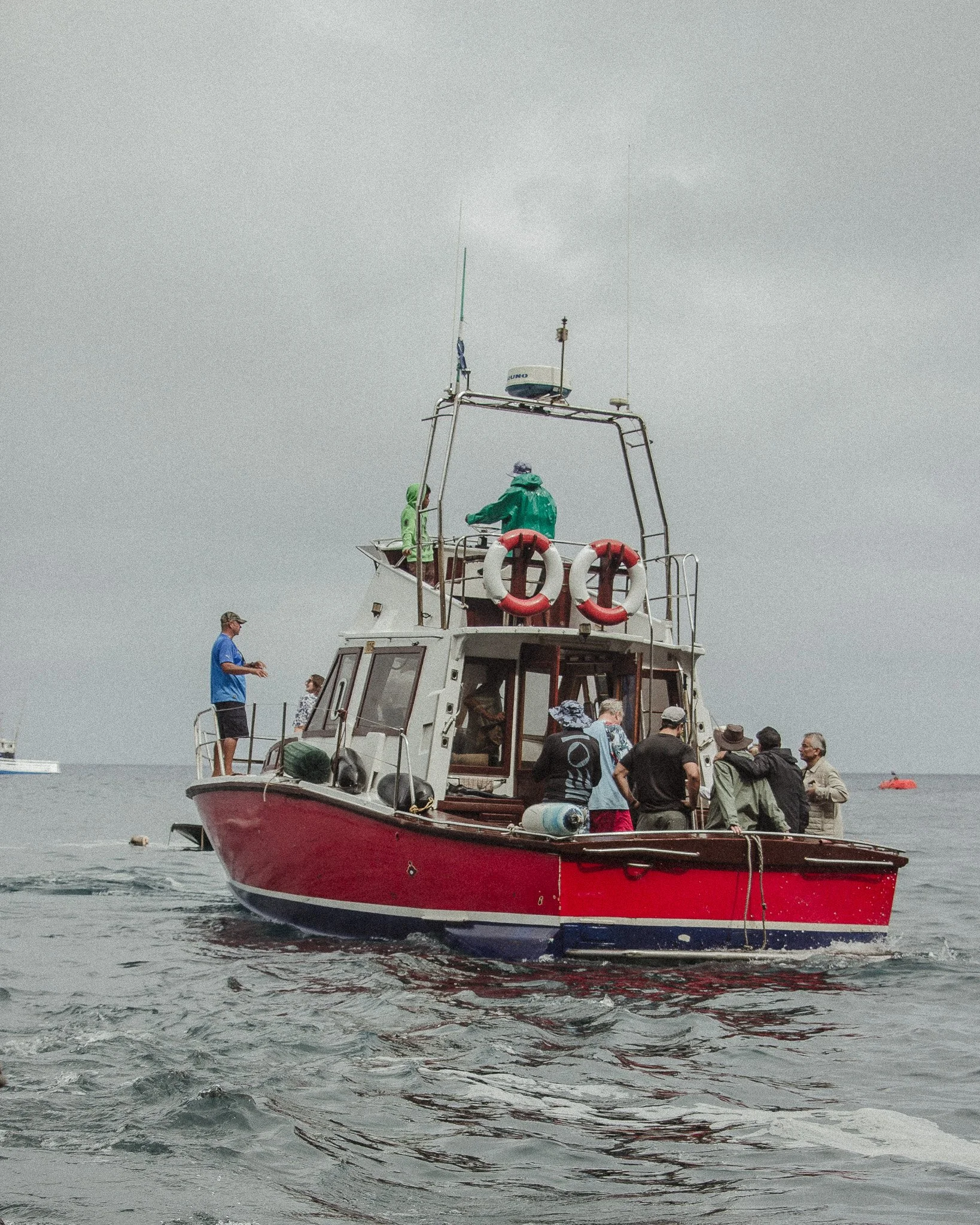
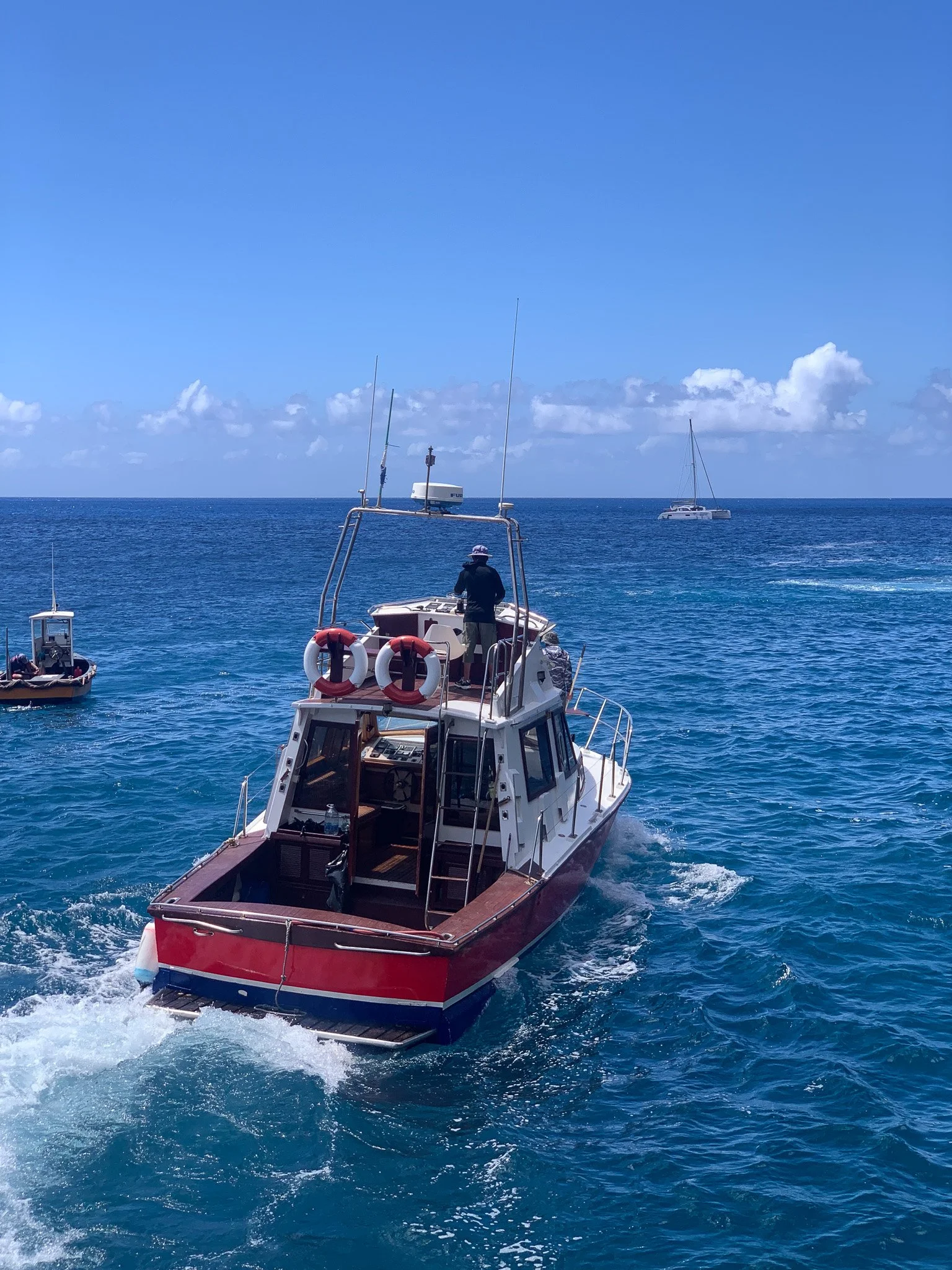
The waters around St Helena are something exceptional. The Atlantic here is a deep, vivid blue — the kind that doesn’t look like water so much as something precious — and it is teeming. Above the waterline, whale shark watching is a genuine possibility, with humpbacks (in season) and other species passing through on their migrations.
Bottlenose dolphins accompany boats with casual cheerfulness, surfing the bow waves as if they’ve done it a thousand times and still find it entertaining.
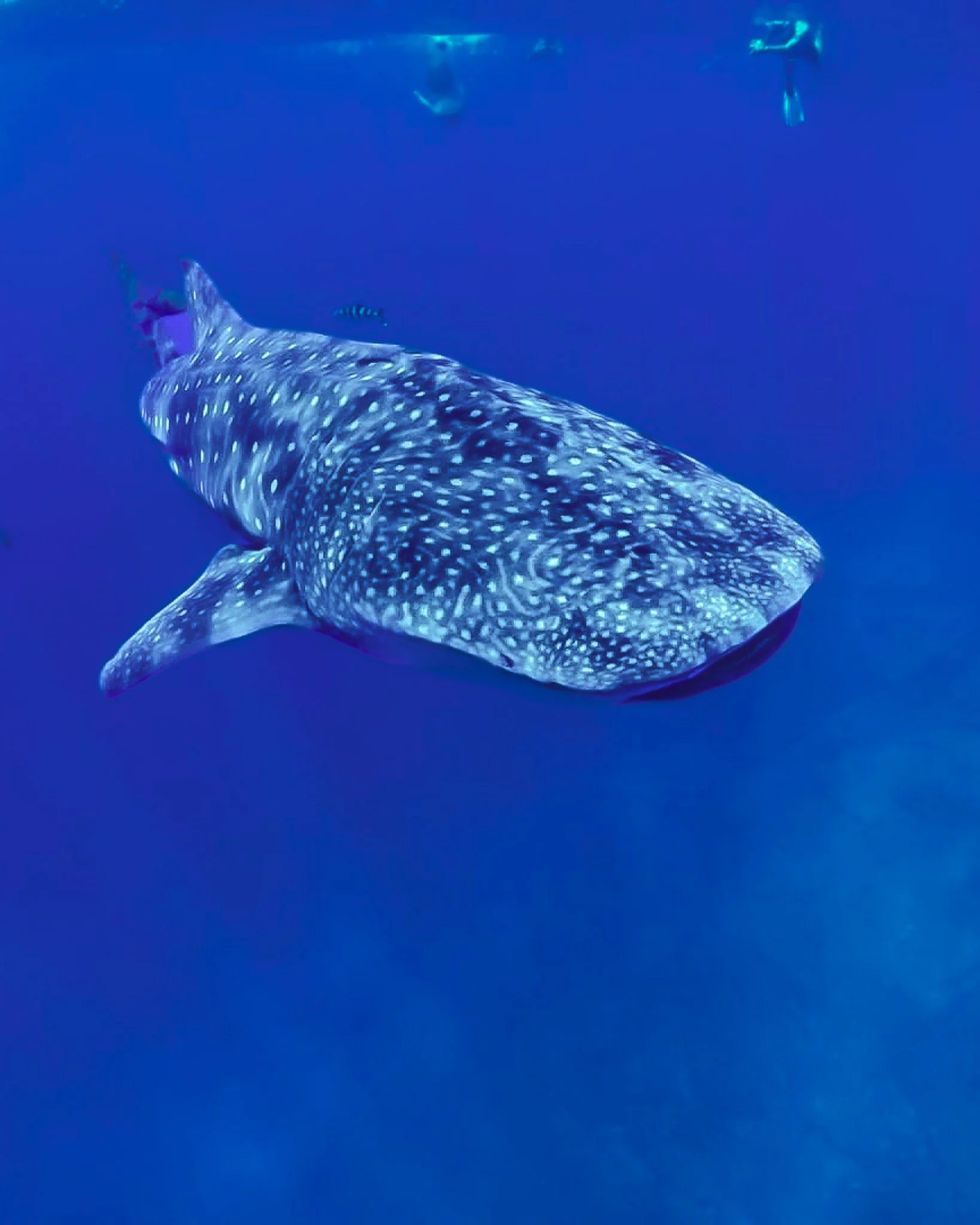
Below the surface, the island has earned an international reputation for one thing in particular: whale sharks. St Helena is one of the finest destinations in the world for swimming with these gentle giants.
Between roughly December and April, the waters off the island host whale sharks that can reach twelve metres in length and yet pose no threat to swimmers, filtering plankton with an unhurried serenity that makes you feel, briefly, like the natural world has allowed you a grace you haven’t quite earned.
Beyond the whale sharks, the dive sites around St Helena are largely unexplored by the standards of established dive tourism. Wrecks lie on the bottom. Reef systems teem with life. The visibility — in water with almost no runoff pollution from a small island with no heavy industry — can be extraordinary.
People who come to St Helena for the marine life often find it resets their benchmarks. Diving elsewhere afterwards can feel slightly diminished. Which is inconvenient if you live somewhere other than St Helena.
The History Is Everywhere, and It Gets In
St Helena’s history is not the kind kept politely behind velvet ropes in a museum.
It is in the streets. In the buildings. In the landscape itself.
Jamestown is one of the best-preserved historic towns in the entire South Atlantic region — Georgian architecture, a functioning castle, streets laid out centuries ago by the East India Company during the era when this remote island was a critical waypoint on the spice routes between Europe and Asia.
Ships stopped here because they had no choice; St Helena was the only land for thousands of miles. Emperors were exiled here. Slaves were freed here, and a memorial to that liberation stands as one of the island’s most moving sites. Thousands of liberated Africans who did not survive the journey are buried in the island’s earth.
Then there is Napoleon.
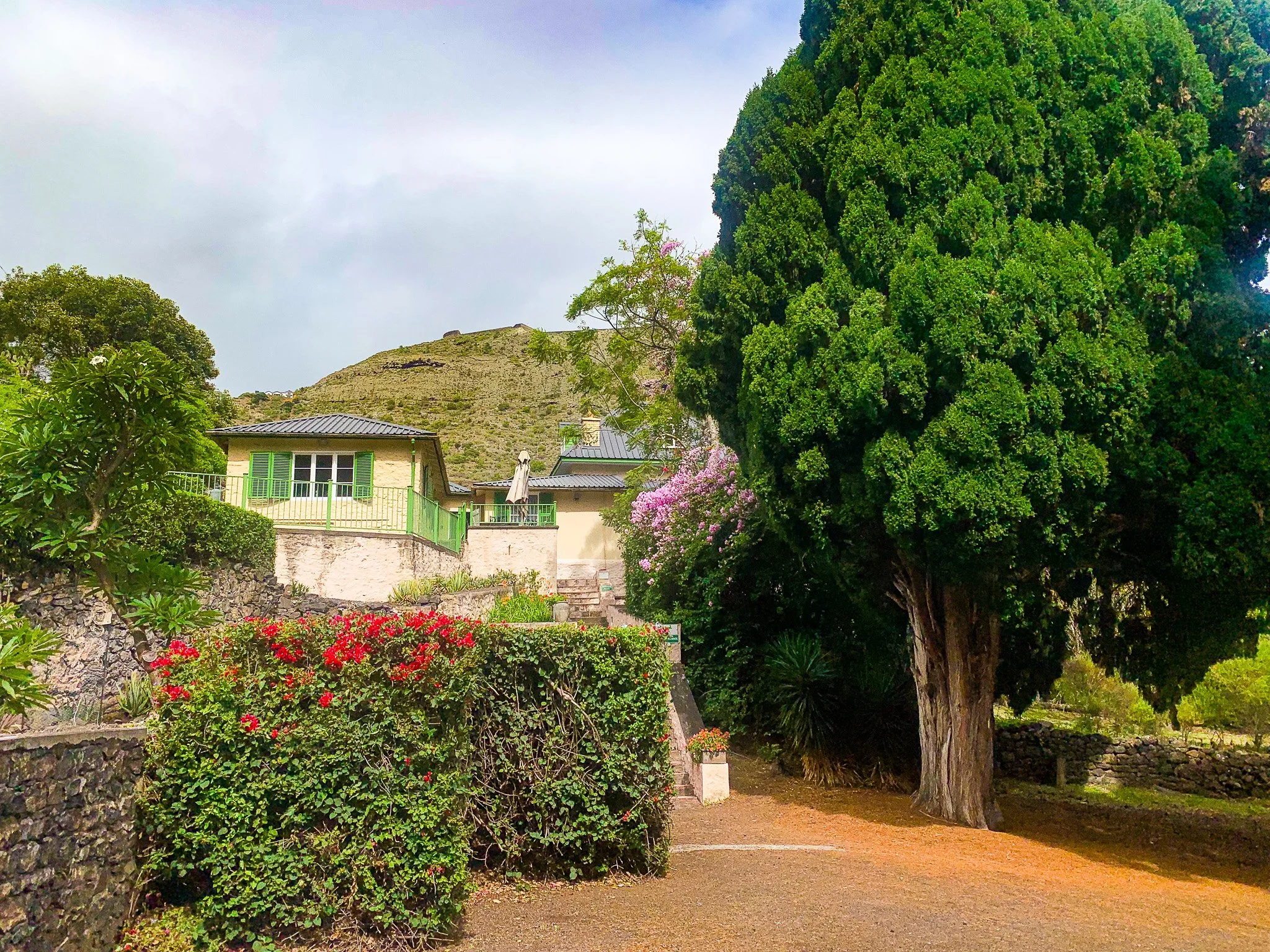
Napoleon Bonaparte spent the last six years of his life on St Helena, exiled here by the British after Waterloo. Longwood House, where he lived under surveillance and wrote his memoirs, is maintained by the French government to this day, a piece of France in the South Atlantic.
His original tomb — empty now, his remains long since returned to Paris — sits in a quiet valley, unmarked by anything except the trees he planted and the silence of the place.
To stand at that tomb, in that valley, and consider the strangeness of it — the most powerful man in the world spending his final years on this tiny island in the middle of an ocean — is to feel history as a physical thing rather than an abstraction. It has weight, here. The past is close.
For anyone with even a passing interest in history, this is risky. You will find yourself reading everything you can find about the island. You will want to come back to see more. There is always more.
The Honest Truth
So here it is, plainly stated: St Helena Island is not for people who want an easy holiday that ends cleanly when the return journey begins.
It is for people who are willing to be changed by a place. Who can accept that somewhere this remote, this beautiful, this genuinely unhurried, and this historically extraordinary might recalibrate something in them that doesn’t fully recalibrate back.
The locals will make you feel welcome in a way you’ll struggle to find elsewhere. The views will embarrass everything you thought counted as scenery before. The pace of life will show you what you’ve been missing. The ocean will give you encounters you’ll describe for the rest of your life. The history will stay with you like a book you can’t put down, even after you’ve finished it.
So if you have things to do, places to be, and a life that cannot withstand the complication of falling in love with a small island in the middle of the South Atlantic — please, for your own sake, don’t visit St Helena.
And if you don’t particularly mind the complication?
Well. You already know what to do.
St Helena Island is located in the South Atlantic Ocean, roughly 1,200 miles from the west coast of Africa. It is accessible by air via St Helena Airport, with connections through Johannesburg, and by sea on select sailings. For travel arrangements, ground tours, accommodation, and island experiences, contact Destination St Helena — your local Destination Management Company on the island.